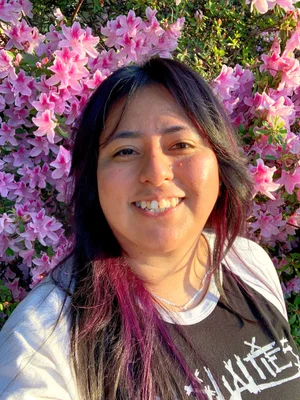
Ancestral Gifts, Cooking, Creativity & Healing: A Conversation with Joanna Oyarzabal Méndez
What does it look like to actually live by your values? This week on Heal and Grow with Creativity, I'm in conversation with someone who's doing exactly that — my dear friend Joanna Oyarzabal Méndez.
Joanna (she/ella) is a queer, fat mujer Mexicana (Zacatecas & Jalisco)-Californiana (SGV & Bay Area). She loves the ocean, going on walks, creating, writing, eating, cooking, resting, existing, traveling and living in her motherland. Joanna supports queer, people of color and fat humans to continue to liberate themselves and their lineage, heal and live their lives a su manera through her business, Profunda como el mar ~ healing | sanación.
During our conversation we talk about:
Letting go of identities rooted in capitalist conditioning and productivity culture
Staying open when life asks you to change course — even when you had a clear plan
Tuning into your body's signals as a guide toward a more authentic life path
Discovering the intuitive gifts you may have inherited or quietly carried all along
The body-mind connection and what it means to experience the world through your senses — not just your thoughts
Cooking as a love language, a creative act, and a way of transmitting care across generations
How capitalism narrows our idea of what it means to be "creative" — and why that definition deserves to be expanded
Using creative expression as a tool for processing difficult emotions like rage, grief, and hopelessness
Neurodivergence and the freedom of exploring what that label might (or might not) mean for you
Joanna also shares what being multi-passionate looks like in her life and work, the very real challenges of building a business that resists being put in a box, and the profound act of reclaiming the word "fat" as a form of self-empowerment and body liberation.
You can check out her work here:
Other links mentioned in this episode:
Watch the video on YouTube and subscribe to my channel here
Listen to this episode on the Heal and Grow with Creativity Podcast
Listen on Apple Podcasts / Listen on Spotify
-
Renata McElvany: [00:00:00] Alright, Joanna, I'm so excited to have you here. Let's get this episode started and I just wanna start off by saying welcome, welcome to you. I've been looking forward to this conversation for a while. And I just wanna say thank you.
Joanna Oyarzabal Méndez: Likewise, gracias a ti, I am happy to be here and I'm really looking forward to the conversation.
Renata McElvany: I think before we go anywhere, I would love for you to introduce yourself and let folks know who you are.
Joanna Oyarzabal Méndez: Yes, of course. Uh, my name is Joanna Oyarzabal Méndez. My pronouns are she and ella. Um, I love the ocean.
I'm a proud Sagittarius. Fire is my element. Um. I love plantitas. I love cooking. I love going on walks. Um, I've been on this journey of learning how to rest and I'm unlearning all this capitalist conditioning these past two years since I left my former job. Um, and so that's been a very transformative journey.[00:01:00]
And I like to start off with what I like to do because I've been on unlearning like. Letting go of certain identities that mm-hmm. Previously were attached to my worth. So that's why I wanted to start off just sharing some of the things that I love to do. I love music, I love dancing as well. Um, and then later I can share about the work that I do supporting folks.
Renata McElvany: Absolutely. Thank you for that. And that's exactly why I wanted to, to start off with your introduction because um, that's something I wanna get into. Just the way that you live your life is so inspiring to me and that's honestly the reason why I invited you to the show because I think that the way you're living is, is very admirable and it's something that I think a lot of us want to be able to do at some point.
And without even realizing that I know that that was the case for me. I didn't even know that I was living a certain way and that things could be different. I'm sure we're gonna get into all of that. But, yeah, I really admire your journey and just, to share with folks a little bit about your background as well with, uh, you just left your 9-5, [00:02:00] well, not just, but it's, I think it's been like two years?
It's gonna be two years. Mm-hmm. And you moved from the US to Oaxaca, so that's. Crazy. 'cause I, it's a huge move. And then, uh, I, I made some notes, so if you see me looking down, that's what I'm doing. Um, and then you started this new life that feels a bit unconventional. So that's really interesting. I wanna dive into all of those things.
And then, then the other thing that really that's really interesting to me is how you have embraced creativity in your daily life. And you're doing really interesting stuff both with cooking and through your business. So yeah, I would love to hear how all that came about. So I think the first thing that I wanted to start off with was, uh, what prompted you to move?.
Joanna Oyarzabal Méndez: Great question. Um, it was a lot of different things. Um, when I started graduate school in 2021, [00:03:00] um, and I bring this up because when I started the program, like I think it was two weeks in, I just had this feeling and I remember verbalizing it to some friends. I was like, once I finished graduate school, I'm gonna move to Mexico.
I don't know what I'm gonna do. I don't know what, how it's gonna look like, but mm-hmm. I just have this longing to. To go my motherland and experience life there. my mom is from Jalisco. My dad is from, Zacatecas I had, um, been going to Mexico a few times previous to that and just, mostly to Jalisco. and like connecting with family members that, you know.
Stayed have stayed there. and just connecting more to my mom's side of the family, my mom's side of the culture, like her Pueblo. Mm-hmm. Um, so I think that contributed to me having that reconnecting, I think, to that longing of just wanting to be, somewhere in La Tierra where my ancestors are from.
so when I started grad school, I started the program thinking I wanted to be a bilingual therapist. Mm-hmm. [00:04:00] I was like, that's what I'm gonna do. And uh, once I started the program, like two weeks in or something, I don't even remember, I was like, I don't think I want this anymore.
And then I was questioning myself of like, then why am am I gonna stay in the program? It's so what, what for, you know, like, it, it's an in invest investment on so many levels, emotionally, financially, didn't know, I didn't have the answers at that moment. Mm-hmm. Uh, I think the journey in itself was part of figuring it out as I went, but I did have that goal and like just longing of once I finish this program, I am, I want to move and then justlive life over there and figure it out as I go.
Renata McElvany: Amazing. I'm wondering were that you, were there any specific body signals or signs that you noticed that, um, were kind of guiding you towards making that decision?
Joanna Oyarzabal Méndez: Yeah, so, um, in the summer of. 2022. I studied abroad in Oaxaca. That was my first time being in Oaxaca. [00:05:00] And the reason why I did the ms, my Master's in social welfare program, at UC Berkeley, was specifically because they had a study abroad program in Oaxaca, like a summer abroad.
And it was very much focused on ancestral methods of healing. I felt just like I wanted to learn and connect more to those ancestral ways, ways of healing. Mm-hmm. Um, my great grandmother, Juana, which I'm named after.
era la partera del rancho de mi papa en Zacatecas
Mm-hmm. Um, and so even though I didn't know her, um, 'cause I never met her, I. Began to feel more of her energy prior to going to Oaxaca that summer. Um, and when I was in Oaxaca and I feel it right now in my body. Like I just feel that warmth, which I think is her, um, in my chest. Like it's hard to explain it, but I feel like just that sensation and that her energetically, um, so yeah.
When I went to Oaxaca that summer, I. I connected more to her specifically, and also my, [00:06:00] uh, my maternal grandmother and my maternal grandfather who have all passed already as well as my paternal grandmother. So that trip was very just transformative. There was a lot of healing that happened on many levels, like intergenerational healing, just being able to connect to my ancestors in a more profound way.
Through the woman that I had the privilege of learning from here, who, um, and I say here, 'cause I'm currently in Oaxaca still, uh, so psychologist, a sociologist La Curandera in all that learning and just wisdom and just being able to, connect to. To the people in my lineage.
Me que ah si 'cause I was like, I shared a lot or I'm not sure if I answered the question, but it's okay.
We we're not here to answer questions specifically. It's a conversation.
Renata McElvany: Exactly, exactly. No, no. I love how everything is flowing and I'm just sitting with, with your experience 'cause it's so profound, when you were talking about you're in [00:07:00] school, you're doing all this work, and then you have this opportunity to go back to Mexico and spend time there, and that feeling that you're starting to get that connection to your, to your lineage, it's so powerful.
And I'm just thinking how. You have to be in tune, right? Like, you have to be listening to be able to notice that. And, and I'm just wondering mm-hmm.
Were you already kind of, um, expecting that something was gonna come up for you or, or, because I'm just thinking a lot of us, you know, we were just going through our life and we don't really notice those signals a lot of the times that we might be getting, but mm-hmm.
You were, and I'm wondering like mm-hmm. What helped you to be in tune?, I guess.
Joanna Oyarzabal Méndez: I think, for example, being connected to my great-grandmother, Juana, um. Being able to talk to my dad about it, which it was his grandmother. And um, you know, she had gifts in terms of being able to support other people on their healing journey, some of which my [00:08:00] dad also inherited. He's talked to me about me also inheriting some of those gifts, right?
Being able to talk to him and hear about her experiences, his experiences, how they have supported other people and their healing journeys. I think that just direct line with my dad, supported me and being in tune with my great-grandmother, even though I physically never met her.
During that time, before I think I came to Oaxaca, I dreamed about her. And once in Oaxaca I also dreamed about her. So through my dreams, and it's hard. Usually I don't remember my dreams. So when I do remember them, I'm like, oh wow, like it go. Okay. I also take it as a signal. I remember I dreamt about her.
And then, with my other grandparents too, I just felt, uh, when we were, for example, we did workshops, around. Intergenerational healing with a psychologist based in Oaxaca, who's from Oaxaca and who's been my psychologist for a few years now. Um, so even in those sessions, just energetically, I.
I felt like my grandparents' energy, and I don't know how [00:09:00] to explain it, como en palabras but in like body sensations, I felt I felt them. I would then journal also and that helped me understand what I was feeling and what was happening. Writing has been a very powerful tool for me. Mm-hmm. And a tool of creation in terms of being able to understand, feel my emotions, um, and for me to like, reflect to do a lot of like self-reflection.
Renata McElvany: Mm-hmm. Yeah. Writing and being able to know what you're even thinking and feeling.
And something I find really interesting as you're sharing is. That connection that you have with your dad and how he helped you to see your own gifts. And I'm wondering what were some of those gifts you started to notice that you had?
Joanna Oyarzabal Méndez: I, I remember when my dad first was like, uh, planting the seed years ago, I would be like, I don't know if that's accurate. Like, I would think to myself, like, I don't, I don't even know what that means and I still am trying to understand what it means. Um. [00:10:00] But he, he told me, he's like,
tienes un don en tus manos, son mis manos uh, which at first I was like, does that mean like Don in terms of like touching or like, you know Right. Doing body work. Like that's where my mind went to initially. Um, and he, yeah, and he, he hasn't gone deep into explaining what that means because I think that's also part of the process of me discovering it as I go, right?
Mm-hmm. Um, as I reflected on it too, uh, creo que el don en mis manos the gift in my hands, for example, one way that it shows up is through my cooking, right through the handling of food, through creating food, through transmitting love and care through food. Another way is through writing. I write with my hands. I, I prefer to write
like on a pen and paper. Yes. Instead of on the computer. Let's sit on the computer too. But I just feel like it's more profound for me when I write on paper and like see my handwriting. And just creation and other forms like creating art, [00:11:00] however that looks like. Whether it's collages, whether it's me trying to paint or draw.
All of that stems from like my hands. Those are the ways that I've kind of seen it. develop or use, and I'm curious just to continue connecting to like, what does that mean? Like, you know, what is my ancestral gift and calling in this lifetime, which I'm still trying to understand. And, um, listen to those signals from my ancestors
Renata McElvany: Thank you for sharing that. There's so much to, to talk about, and I'm thinking about food.
First of all, that's something that I'm really inspired by when I see the way that you interact with food, what it means to you.
And you're right. I think being able to touch things, make things with our hands is so powerful that hand to body connection or as. I should say the hand to like mind connection there is power when we're touching things and when we're understanding the world through our body. You're modeling what that looks like for all of us [00:12:00] because I think so many of us are stuck in our heads and we wanna analyze everything and we forget that we have this body, right?.
That, that we can experience the world through, through our, our hands, our eyes, our ears. Mm-hmm. That we're not just brains walking and overanalyzing everything. Mm-hmm.
With the food, how did you start playing with that? How did you grow up cooking? Were you shown or did you have to kind of go off on your own and, and learn?
Joanna Oyarzabal Méndez: No. I grew up cooking and helping in the kitchen with, um, my paternal grandmother
mi abuelita Fide que en paz descanse
and my tias on my dad's side of the family. 'cause I grew up with all of them. It was like a big house of 20 plus people, and from my mom as well, who passed down the recipes from her mom.
mi abuelita Lupe, entoces mis mujeres Are the ones who taught me how to cook. and I have very beautiful memories, although [00:13:00] also me acuerdo when they would wake me up hella early, like on the weekends we, and.
mi abuelita le decia a mi mama Because it was like 8:00 AM or 9:00 AM we were still sleeping, me and my cousins and she'd be like,
Licha usted cree que todavía van a estar dormidas, ya se les pegaron las sabanas and they would try to wake us up to like help with the chores and cooking in the kitchen and see, so that I didn't like, but every beautiful memories of us just being in the kitchen as in,
Haciendo gorditas o que haciendo el desayuno, o que preparando para la birria, para los tamales and we would make tamales. It was also like. My grandma, my Tia, as my mom would show us, like me and my cousins young girls, like it was like delegating the task, right? Mm-hmm. Like,
Ah estas personas van a amasar la masa, nos enseñaban a hacer la masa, estas personas van a ayudar con los rellenos, estas personas van a embarrar y ahora vamos a like, assemble, cook and then A alguien le tocaba bailar, bueno bailar también, lavar los trastes y [00:14:00] va a decir
like the tasks. And we would like. Share stories. Like, my grandma was like a phenomenal storyteller. She would always tell you her stories about life in El Rancho. All the hard things. All the cool things. The things the, she missed all the chisme. Yeah.
Que fulanito hacia esto, que fulanito hacia el otro Um, so yeah, when we were cooking it was like, a time to story tell and like laugh, Y luego también a veces había peleas, you know? Uh, but like
Había un poquito de todo, pero si era como una experience. And now that, I no longer have that in that way because she's passed. I look back I'm very grateful to have been able to experience that and to learn from her, how to make chilaquiles, like how to make different, foods that are very much a part of our culture. And to be able to continue practicing that.
Also experimenting with recipes and trying different things. Respecting the traditional ones, but then also leaving room for creativity. If there's certain ingredients that are in season using [00:15:00] those. Si no hay algo que encuentras pues como puedes hacerlo de otra manera.
Renata McElvany: Y suena como que ella tuvo mucha influencia en como eres y como todavía te gusta concinar y todavía mantienes esa tradición no? Como a la siguiente generación.
Joanna Oyarzabal Méndez: Si, y mi mami también es una gran cocinera
And she shows her love and care through cooking for you and so amazing. Love language. Yes, it's definitely her love language. It was also, I think my grandmother's love language and I've inherited that from them. It's also one of my love languages.
Renata McElvany: By the way, were you, was this happening in Mexico or was this happening in the US?
Joanna Oyarzabal Méndez: No, this was happening in California. Oh, yeah.
Renata McElvany: So your grand, your grandma came to California?
Joanna Oyarzabal Méndez: Yeah, she came to California. I don't remember when, but yeah, I grew up with her. So she left the Ranchito and also my grandfather. Su pareja they both like, came to California I think when I was like 1-year-old or 2-year-old.
So I grew up with them until I [00:16:00] left the home in Southern California and moved up to the Bay Area for school.
Renata McElvany: Wow. That is such a nice way to grow up to have your, your grandparents, to have those traditions so strongly with you. Because I think a lot of people, once they migrate, and I can speak for myself, I feel like once I migrated to the US I lost some of the things that we would do.
For example, I didn't celebrate Dia de Los Muertos for the longest 'cause I was like, oh no, like I'm supposed to assimilate and I wanna do what we do here and like embrace the traditions here and I noticed there's people like you, people who I, I've come to meet who have never really thought about it that way.
Like they embrace their roots and they hold onto who they are, even if they're in the US and mm-hmm. I always question that about my own experience of like, why did I feel such pressure to give up my culture. Mm-hmm. And I do think that has to do with our families and like the way that our parents and the [00:17:00] people around us make us feel, or the way they remind us to either stick to our traditions or not stick to our traditions.
And I don't know about your family. Mm-hmm. We, you say that, are they traditional or would you say they're more, forward thinking and they're kinda embracing new, new things.
Joanna Oyarzabal Méndez: Como en todas las familias It depends on the family member. There's a little bit of everything, but yeah, there's definitely traditional thinking in some aspects.
And then there's certain family members who are more open-minded and forward thinking and they also shaped and influenced part of who I was, who I am.
And I think the younger generations now, like mis primos, the 20-year-olds, they're much more open-minded and conscious little human beings who are, aware of all the injustices going on in the world.
Renata McElvany: You were talking about writing and art, and that is really interesting to me too, because. You, I think, represent a lot of the women that I talk to who don't necessarily, label themselves creative or [00:18:00] artist, but do practice creativity in many ways.
So I'm wondering where do you stand when it comes to this label of artists or creative?
Joanna Oyarzabal Méndez: So I think previously I wouldn't have said, look, oh, I'm a creative, or I'm an artist. Because of this, like thinking that comes, or this conditioning also that comes with like, oh, to be able to call yourself that you need to have x, y, or Z certification or certain level of experience.
Like all these things that society tells us that we need to do or, you know, like get the degree mm-hmm. To be able to be worthy of like. The title. That title, right? Yeah. And then it's also very much tied to productivity because of capitalism and how much can you produce and then how much are you worth?
Since I've been on, still unlearning that, right? 'cause it's very like deeply ingrained. Mm-hmm. So it comes out still in different ways and I think it's gonna be a lifelong practice of unlearning that. Um. Now I'm like, yeah, I'm a creative person. [00:19:00] Because previously also I, I would be like, oh, it's 'cause I don't know how to draw.
Yes. Like if there's like, if there's like a specific way you need to know how to draw, you know. But that was my thought, like, oh no, I can, no, I, I, I can only do stick figures, like I don't know how to draw. And then I would get into the overthinking 'cause I am an overthinker. I, I, yeah. Even though I try and I've, I've learned to just accept that that's a part of me and, and trying to just embrace it and learn what patterns I have.
Like kind of like learn how to identify before I spiral. Like what's happening when I spiral, after I spiral. Um, where, where was I going with this, Yeah. I, that I thought I didn't know how to draw, and then mm-hmm.
Pero es que yo no se dibujar
Pero it's a practice, it doesn't have to look a certain way. It's just a like not focusing on just like doing it without, like thinking about it. I'm just gonna draw whatever. For me, what works is like, whatever. Comes to me in the moment. Like I, that's how I create, like art. I, [00:20:00] it doesn't work for me to think about what I wanna create or have an idea in my head like, oh, I wanna do flowers, or I wanna draw this.
Like, I just kind of go with my emotions in the moment. And like abro mi notebook y ya empiezo yo como a dibujar like, I'll just start drawing or like collaging and then that's my creative process. Like I can't. Think about what I want to do before, or look at a, like an image to inspire me like that. It just doesn't work for me.
Renata McElvany: That's such a good point for example, with me, because I went to school and mm-hmm. School usually starts with your head, right? Like they're always mm-hmm. Making you think. I got really used to thinking about what do I want to do before I sit down to do it. Mm-hmm. Because then you have to like plan it out and then you execute it.
And, and so it's a very step-by-step linear process. Mm-hmm hmm. And that's one way to do it. And I think that's, that's valid. There's I think places and times where, where that really works. But when it comes to this connection to ourselves or when we wanna use it more as a [00:21:00] therapeutic tool, a tool for our own growth.
Kinda get in the way, you know, and that for me, it's taken a while to let that go. So hearing your process of like, I respond to how I'm feeling through these tools sounds so soothing and so much more relaxing and low pressure.
Joanna Oyarzabal Méndez: Mm-hmm. Si, definitely just like more low pressure and taking expectations out of it.
And to your point, yeah, I think there's different ways of doing it, right? Like one is right or wrong. Mm-hmm. It's kind of figuring out feeling, being in tune with your energy and where you're at, because maybe right now this works for me, maybe for another project, it'll help me to like think about it and plan it out.
Mm-hmm. You know? Mm-hmm. So I think it's just being in tune with your energy and where you're at and going with that instead of following a specific process or somebody else's process.
Renata McElvany: Right. And so when it comes to either writing or art, do you feel, are you inclined to wanna take classes or do you like just going [00:22:00] with the flow and you figuring out whatever you want to do?
Joanna Oyarzabal Méndez: I like both. Um, I, I've done like groups where we like collage and create together and I really like that.
So I'm gonna shout out my Manita Dr. Dulce Lopez, Dr. Corazon cause that's how I actually started with like creating in a journal. She shares her love journal with the world, and it's a beautiful gift.
It's been very transformative for me. So like, it's like my love journal. I started with this like three years ago. Um, and she holds groups sometimes, so that's how I, um. Met her and where it was like it was a group and she introduced the love journal, like, you know what the intention is.
And then we created together, so theme, and I've gone to a few of her gatherings, which are virtual and she does them seasonally sometimes. And so, you know, fall, winter, spring. And so it's very beautiful space, like a community space to like reflect together and create art. So I've done some groups and then, [00:23:00] um,
A veces yo solita
sometimes I'll tell my partner and both of us will create in our journals or she'll, uh, paint and I'll write like a, a combination of different things.
Renata McElvany: And talking about overthinking, you mentioned that earlier. It sounds like you're also so good at helping yourself to move forward, even though you are an overthinker, and I'm wondering are there any specific things that you can think of mm-hmm. That help you to get out of those loops?
Joanna Oyarzabal Méndez: Sometimes writing down my thoughts or what I'm feeling in the moment helps me when I'm in the loop
and also creating art of some sort. So I've used my love journal even, when I'm experiencing like hard emotions and just overthinking.
Like for example, my God, I, I just feel hopeless and I also have so much rage at everything that's going on. And then I'm, I'm just smiling 'cause I'm like, mm-hmm how are we gonna change things?
There's just like one thing after another. I've done this a few times [00:24:00] where when I'm in that loop, I'll open up my journal and I'll start creating, um, and expressing and feeling like, for example, my rage. Mm-hmm. My hopelessness, my sadness. So those emotions too, I make room for myself to feel them, even though they might be uncomfortable or their hard sometimes are difficult.
Mm-hmm. And art has been been a very powerful tool for me to be able to like, feel and like sit with my rage, with my sadness, with my grief and create something with it and mm-hmm. And also not just be like, oh, I'm gonna create something and then I'm done feeling it. No. Like if I'm feeling it the rest of the day, like it's okay.
Renata McElvany: What do you think is the difference between this modality versus other things that you've tried when it comes to your healing? Between this modality and like, for example Yeah. Talk therapy, correct? Mm-hmm.
Joanna Oyarzabal Méndez: I think creating art like this on my own or in a group setting I think it just flows in a different way. It [00:25:00] feels like with like with menos pressure
for example, compared to like going to therapy and trying to figure out what I wanna talk about and what I wanna like process and, um.
Kind of like a, like a step by step, not a step by step. 'cause you go and then you talk about what you're of. Right. You know?
Renata McElvany: Pero como que hay mas estructura no? Y tienes que seguir los pasos.
Joanna Oyarzabal Méndez: Exactly. Like I schedule my session, then I go and then I talk about, you know, certain things for one hour and then I process after. Like that's the process for that. And it's helpful in different ways. Mm-hmm. And with this, I feel like it's just like I create for the amount of time that I want, it's like unstructured and I.
Allow myself to flow in the moment.
Renata McElvany: Yeah. Talking about structure and maybe linear processes, something that, that I talk about is neurodivergence and a lot of neurodivergent people are not linear thinkers and [00:26:00] mm-hmm. That's one of the reasons why I'm so passionate about using art as a therapeutic tool, as a tool for self-discovery, because you don't have to be as structured and as step-by-step.
Um, you're trying to understand yourself better. Mm-hmm.
I know when I mentioned this to you, you had a very interesting answer in terms of like these labels, right? And I wanted to hear more about that because I think that you, you mentioned something about you don't necessarily use those labels, but maybe you resonate.
So can you tell us a little bit more about that?
Joanna Oyarzabal Méndez: I think I'm still understanding how my brain functions and how it shows up in different areas of my life where some people have told me that behavior is like.
Something that a neuro neurodivergent person kind of like, does, you know, or like, I've seen things where it's like, oh, if you're neurodivergent, like you tend to do this or you tend to do that, and I'm like, oh yeah, I, I do do that. I, but I hadn't thought about myself as like neurodivergent, I guess, growing up.
I'm not like against the label. I'm still trying to understand like. What that means for [00:27:00] me, how that shows up, and then how, because sometimes I do think in linear ways, but then sometimes I don't. So then I'm like, am I, am I not? Like, and, but instead of focusing on a, on, on that label per se, or another labels per se, it's kind of for me.
Figuring out, okay, what are things that work for me? What are things that don't work for me? And allowing myself to explore, along the way. And as I figure out like, what are the things that that do resonate? What are the things that don't? What are the processes that maybe do work for me? And what are the processes that don't?
Renata McElvany: It sounds like. You don't necessarily need a label at this moment to continue functioning or doing your life, but it's mm-hmm. It's out there like if you need it, I'm sure. Yeah. Like you would use it.
Joanna Oyarzabal Méndez: Yeah. And it's helpful to see, people share about their journeys. For neurodivergent, for me to see neurodivergent folks share about their journeys [00:28:00] and things that they struggle with because in some of those things I see myself and I feel seen.
Renata McElvany: I'm just sitting with that because I think it's profound. I think a lot of us are quick to, especially I think in this day and age, to hold onto labels or to be like, oh yeah, that, that must be me.
And there's a something that could be said about people maybe overly identifying with certain words or certain Yeah.
That true labels, right? That's true. Mm-hmm.
But there's also the other side, it has been my experience where I feel like sometimes those labels do help you to understand yourself better and it gives you language to, to know who you are.
And this is my very personal opinion, I hold them loosely and I'm open to them changing and potentially there being something else that might come down in the future that might be even better, more specific, who knows?
But I do think it's a journey and like you said. It's interesting to hear what other people are experiencing or how they're going about their own journeys, because I find that when I hear other folks [00:29:00] talk about their experience, it helps me to kinda question myself too, and wonder, oh, is that, does that apply to me?
Is that how I'm experiencing things?
Joanna Oyarzabal Méndez: Me encanta
I love e that you said that, of like allowing yourself to be like right now. That feels aligned and that feels like it. Identify with that and that can change and that's okay.
Renata McElvany: Right.
And talking about labels, the other thing that I love to, to check in with folks about is they're multifaceted selves. A lot of the women that listen to this show are multi-passionate, like I am.
Joanna Oyarzabal Méndez: We do a lot of different things. Mm-hmm. There's a lot of facets to who we are, and I'm wondering for you, what does that look like? Does that resonate?
I do identify as multi-passionate because there's a lot of things that,
Que me gustan hacer, que me encantan hacer y se me dificulta en mi negocio decir
oh, I only do this specific thing, like this is my niche. Like, I don't like that. Like there's different. Types of things that I like to do. There's [00:30:00] different life experiences that I have. There's different things that I can support people with. And so that's why it's hard for me to be like, it's just this one thing and I'm gonna help you pick a lane.
This one thing. Like, no, it's like, it's like a process, you know? And because I'm a multi-passionate person, um, and because I have so many different interests and so many different lived experiences, like I, I can't put myself just in one lane.
Renata McElvany: How have you decided what to lead with, when it comes to your business versus something else. Given that you, like you said, you have so many experiences, so many things that you could talk about. How are you navigating that?
Joanna Oyarzabal Méndez: Trying to navigate it and figure it out. That's the honest answer. What I do have clear is, um, that I specifically wanna support LGBTQ plus. Mm-hmm. People of color and fat humans on their healing journeys.
Renata McElvany: Ooh. Say more about that. Um, that sounds really interesting.
Joanna Oyarzabal Méndez: You know, within that, the, like, there's just so many [00:31:00] different things, right. That you can support people with. Mm-hmm. Like learning how to establish boundaries, for example. Like, there's just like so many things that are, that you can support people with in their lived experiences, and yeah, in their life in general.
But yeah, the work that I have done previously and that I wanna continue doing is supporting specifically these communities and shedding and unlearning all the societal conditioning, like cultural conditioning, like systems conditioning that tell you you need to be a certain way.
And then through this process of then self-discovery and reconnecting to you figuring out what do I actually want? What are my values? Are there. different ways that I want to move through the world. What do I wanna let go of and release? Mm-hmm. Uh, how does that feel in my body? The goal is for them to be able to live their lives more,
a su manera
more aligned to like what they want, need and desire.
Renata McElvany: Is there [00:32:00] something about, because I, the word fat can be triggering, right?
For some people or, I think it just, it comes with a lot of baggage and, and I wanted to know more about that. What, why that word?
Joanna Oyarzabal Méndez: For sure. Um, for people who live in fat bodies and who have lived in fat bodies, right? There's a lot of negative connotations associated with the word fat, and it has been used in very harmful ways and continues to be used in very harmful ways.
It can be very triggering for people depending on which part of their journey they're at. For me, it was a very triggering word for many years. Um, and it no longer is, I went through a long process of. Learning how to love and accept and respect myself and my fat body.
And for me it's been a, a process also of reclaiming the word fat of, of like, it has been used in a negative way to oppress and harm my body and [00:33:00] myself and for, for decades.
And it still is used in a negative way, but I have decided to reclaim it. And, um. It like a beautiful meaning like, yes, I'm a fat person and I love my fat body.
I respect my fat body, and I want to be able to support other fat humans and people who have experience living in fat bodies to heal from, you know, if they've had negative experiences around their body size mm-hmm.
Heal from those negative experiences. To learn how to respect, validate, and love the body that they inhabit, right? Because right. We,
Tenemos este cuerpo por el tiempo en que estemos en este mundo
For, you know, for the time that we're in this world, we're gonna be in this body and, um. Sonia Renee Taylor has been a great inspiration for me. Um, her book, the Body is Not an Apology, and she talks about that we were not born hating our bodies. And that's true even if we don't remember that time in [00:34:00] our lives.
Like for those of us who have experienced hating our bodies in some capacity, right? Mm-hmm. Maybe we don't remember when we didn't hate our body, but we weren't born hating our bodies. We were taught to hate our bodies. And when. And when you live in a fat body, there's different ways that your body's oppressed.
And if you add then other intersections of your identity, whether you're a person of color, whether you have a disability, then you know that oppression just increases. I think just her sharing her journey and the work that she does around body liberation it has been and is an inspiration for me.
Mi granito de arena and I is also supporting other folks and liberating themselves, liberating their bodies and embracing their bodies. Yes. Their fat bodies.
Renata McElvany: That is such powerful work, and I love what you said about it depends where you are in, in your journey. Whether you will see this word as triggering or mm-hmm.
Maybe they will work with you and, and you will help them to. To embrace that word and, and make it mean something [00:35:00] powerful and meaningful to them.
Is there anything, that you're currently offering or how are you working with folks right now?
Joanna Oyarzabal Méndez: I am working with folks one-on-one and I am also planning on, offering workshops again in the future. I offered some last year and a group program in the future. 'cause I, I do love group work and I think it's very powerful and transformative to be able to work through these things like in a group setting.
Renata McElvany: I love that.
And I know we're coming up on, on time here. I, I do wanna say, we, we are gonna share your work, of course, your links to your Instagram, to your pages so folks can connect with you.
But before we wrap up, is there anything that you feel that's important to share with, with the women that are gonna be listening to this show?
Who might be feeling disconnected, who might be feeling overwhelmed with everything that's going on in the world. Is there anything that you would wanna share with them?
Joanna Oyarzabal Méndez: Yeah, there's several things. But the ones that come to me right now are [00:36:00] be more of you. That in itself is very powerful. Reconnecting to who you are, and living your life in a way that's aligned to your values, right?
And don't be afraid to move differently through the world. And that's gonna, that's gonna entail you grieving and letting go of past identities maybe. And it's okay. It's a process. Allow yourself to do that. But don't be afraid to move differently through the world.
Something, an art piece that I created actually a few weeks ago when I was feeling so much rage and helplessness of like, oh my God, there's just so much going on.
There has been for decades 'cause of colonization and all of these horrible things. Is that we have people power, we have community power, and they're not gonna be able to take that away from us.
Renata McElvany: Yes, yes, yes.
Joanna Oyarzabal Méndez: I know Snaps took that all the time.
Yeah. And I feel it. I feel that energy. I'm like, yes.
They can't take that away from us.
Renata McElvany: That is such a powerful reminder. Yes. Community and learning to develop our communities to [00:37:00] organize. And you're right, they can't take away our power when we're working together.
You and I both have had conversations about how, how do we do that, right?
Mm-hmm. How do we find that community, and it's okay to be in the journey, same, and I love what you said about living your values live, aligned to you, to what's important to you. I'm also a huge believer that when those things align, when your values and the way that you walk in the world are in integrity, that's where you find that peace and that calm, that you think that you're gonna find outside of yourself.
Joanna Oyarzabal Méndez: Yes, yes, yes, yes. And if you know who you are and what you stand for, like nobody can
Renata McElvany: can move. You can't shake you..
Joanna Oyarzabal Méndez: Yes. Exactly. I was like, thank you. I love it Energetically, we're, we're there.
Renata McElvany: I, I see you. I see you. Uh, Joanna. Well.
podríamos hablar de esto por horas verdad? Pero muchísimas gracias por haber estado aquí.
For being here, for sharing yourself.
Again, [00:38:00] I'm, I'm so inspired by the way you live your life. Not just the labels, not just like your job, but who you are as a person, your soul, your energy, and I feel very blessed that you joined us today. Thank you so much.
Joanna Oyarzabal Méndez: Gracias Renata, I receive those words with a lot of love. Um, thank you for the space, which is very important, and thank you for inspiring me and us to create, because those ig lives that I've seen, those posts are reminders to me of like, yes, it doesn't have to look a certain way. Like create, create an any way that you can.
Renata McElvany: Absolutely. Thank you so much to everyone listening, and we will talk on the next one, bye everyone. Thank you.
Renata is a creativity coach who supports neurodivergent and multi-passionate women of color in building a kinder relationship with themselves through expressive art. Her work helps clients move from feeling overwhelmed and disconnected toward more ease and calm. She’s currently offering a free copy of her therapeutic art-making workbook when you join her email list. Sign up here to receive your free copy.