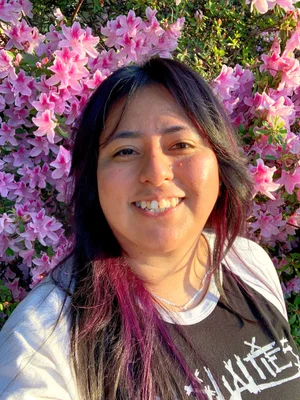
Creating As a Form of Self-Care with Kait Matthews
This week I’m delighted to share with you a wonderful conversation with our first guest of Heal and Grow with Creativity.
Her name is Kait Matthews, an artist and illustrator born in Toronto, Ontario, Canada, of Ojibwe/Potowatomi heritage. She graduated from the Laguna College of Art and Design, and currently resides in North San Diego County with her partner and their four-legged rescues.
During our chat we talk about:
Creating as a form of self-care
How creating can help us to shift our relationship with ourselves
Finding creative community and connection without losing ourselves, and
The power of self-talk as we attempt to sit down and create
Moreover, we also discussed her passion for painting portraits and how she’s using her art to amplify and celebrate stories, myths, and legends of Indigenous women from around the world. She also shared about her own journey reconnecting to her native heritage and how this experience has shaped her relationship to her art and healing journey.
You can check out her work here:
Other links mentioned in this episode:
Watch the video on YouTube and subscribe to my channel here
Listen to this episode on the Heal and Grow with Creativity Podcast
Listen on Apple Podcasts / Listen on Spotify
-
Renata McElvany: [00:00:00] Awesome. I'm so excited to have you here, Kait, thank you so much for reaching out. I have to say, you're the first guest of Heal and Grow with Creativity, and I'm just so, so excited to have you here. So thank you.
Kait Matthews: Oh, thank you. I mean, I just love your energy. You're very inspirational and connecting healing and art. I don't know, it's good for everybody that wants to be an artist and that's creative. So thank you.
Renata McElvany: Yes. And, it's a pleasure to have you, and I'm really excited to be talking to you. Well first of all, I would love to hear a little bit about who you are. Where you come from. Introduce yourself.
Kait Matthews: Yeah. Hi, I'm Kate Matthews and I'm an artist slash illustrator. I'm originally from Canada. I'm, [00:01:00] I am of Native Canadian heritage, Ojibwe and Potawatomi. I'm registered with Chippewa Rama in Ontario, Canada.
I actually was creative earlier in my life, but in a different direction in theater, and then halfway, well, about 15 or so years ago, I wasn't enjoying the journey anymore. But I am still kind of a creative person. So I went back to school for fine art and I graduated from the Laguna College of Art and Design, in painting and drawing.
So, um, yeah, and I just published a book and it's full of art and, and I'm very proud of it. And it also reconnects me with my heritage. It's called Feathers of Wisdom. I don't know if you can see it. [00:02:00] it was a work of, you know, love and I worked with the writer.
We worked together for about a year and, um, we decided that we wanted to make it, not only informative, but also inspirational. And so at the end of every chapter, there's inspiring words for people that maybe at the time might feel lost or disconnected, and kind of just the whole premise of the book, and I think for the entire world is that we're all one, we're all connected.
And we can help each other out and to inspire each other and, and remind each other where our roots are and where we're from, and to be proud of it and, um, you know, and get inspiration from your roots and your background and that kind of thing. So, um, I'm hoping that it will inspire anybody who reads it.
And [00:03:00] also, uh, people will learn about various Native American cultures, traditions, and stories.
Renata McElvany: Ooh. Thank you for that. That was, that was beautiful. There's so much that I wanna ask you about already. So I, I'm hoping that we, that we stay, uh, on track here because there, we, we are gonna talk about everything, but, um, okay.
Yeah. So, tell me a little bit for our listeners who might not know. A lot of the people that listen to this show are not necessarily creative or they have been, telling themselves that they can’t do creativity because of X, Y, and Z. And I would love to hear a little bit about that, that period for you of like, when you stepped away from, from creating and then, what brought you back? What made you realize that you wanted to come back to creating in some way?
Kait Matthews: Well, it's kind of like, you know, say you have a, like a, a full-time job or you have a family you have to [00:04:00] take care of. And, um, I found that I needed something to, I don't ground myself. Like time for myself, but in a creative way.
I'm just starting to learn how to play the ukulele and, um, uh, it's hard for me because I'm not a musician, but, um, I wanna explore and it, and every time I pick up, even though I'm, I'm struggling, I'm so focused in it and it, it just kind of grounds me, you know, just learning something new and exploring.
'cause I think the creative process is all about also getting to know yourself. You know, while you're creating and just those little kinds of things that you learn about the creative process and about the medium that you're choosing. [00:05:00] It’s an escape, right?
Sometimes even a validation, you know, when you actually finish a project and you go, oh man, I did that.
So it's, um, yeah. And so I always think, you know, no matter how much time is taken away from you during the day or, you know, it's always good to be able to take, make some time for yourself. And do something that you like that's creative. It doesn't have to be painting or drawing or playing a musical instrument.
It can be sewing, creating an outfit or knitting or crocheting or something. But you're creating, you're in that creative process or mindset. And so I think that's important to do. And it helps you take care of yourself too. Right?
Renata McElvany: Right. Yeah. Yeah. So tell me a little bit, I'm curious.
What did you feel was the difference between theater and now that you're playing with your [00:06:00] ukulele? Because they're both creative. What felt different to you about it?
Kait Matthews: With the theater, I wasn't a writer or was able to create my own projects, so I always had to kind of go to auditions and depend on other people for, you know, my creative outlet.
I mean, I could do a little monologue by myself in my bedroom, but that didn't work for me. But with, um, you know, with picking up a pen and paper or paint or whatever I'm creating, actually I'm just doing it for me. And even picking up a musical instrument, I'm not looking to perform and start a band or do whatever.
I might meet people down the road that have the same interest and wanna just strum the ukulele, but it's my kind of release, like to get away from the craziness of the world, I guess. Yeah.
Renata McElvany: Yes. [00:07:00] And, and tell me a little bit about that. I guess what sorts of things you do to protect your time with yourself, especially with everything going on right now?
I think so many folks are struggling with, uh, making time for themselves, maybe feeling a little bit selfish and, and they're wondering to themselves, is this really like something I should be spending my time doing? It might feel hard, soI'm curious. How is that playing out for you?Kait Matthews: Yeah, it's, it is a struggle. It is a thought for me. 'cause I'm like, oh my gosh, why am I doing this? I've started painting. Um, but now, I have to do the laundry. I've gotta pay these bills. I've gotta do this.
And, you know, I am thinking, should I be doing this now or should I be getting all the work done first and then playing? And, sometimes I struggle with that and I go, no, um, you've gotta take care of yourself first. And I'm not especially mentally in this. [00:08:00]
And so it's kind of like you have to force yourself not to think that, um, you know, this isn't priority or this isn't worthy, you know, because it is, it helps me with my, you know, sanity and I find comfort in creating and doing something for myself.
And I didn't grow up being encouraged to do that because you always had to get work done first and do this first, and then you can go out and play. You know, and it's just like, no, I'm, no, I'm grown up now. I can do what I want.
Renata McElvany: Right. That's like the beauty of being an adult that you get to choose and practice choice, which is so powerful, especially like you said, for those of us who grew up not feeling encouraged or supported in taking care of ourselves.
I think that's a beautiful segue into, [00:09:00] what is your relationship with self-care? Is it something that you, you practice a lot? Is it something that maybe doesn't come as easily? I'm just wondering, where are you with self-care?
Kait Matthews: When I was younger I wasn't taking care of myself that way.
I didn't like myself as much then as I do now, but the only way, it was like a journey saying no, it was like an inner struggle. Like one person saying that's not worth it. No, no, don't do that. No, you have to take care of yourself! You can't take care of other people if you don't take care of yourself.
You know, it's just like this constant. And sometimes it still happens, but I think it's discipline too. You gotta force yourself. Okay. I really wanna make myself feel better. I wanna make myself, you know, less stressful. I wanna think better things about myself. How do I do that?
And my way of doing it is by tapping into the [00:10:00] creative part of me. You know? Any kind of creativity that you can think of. You are making yourself a richer, kinder, nicer person to yourself and then to others, you know?
Renata McElvany: I totally, totally felt that.
Something that really stood to me as you were speaking was what you said about how “I didn't really like myself”. I feel like I really resonated with that, and wonder, how do you think your creativity, your self-expression, your art has helped you to shift that relationship with yourself?
Kait Matthews: I guess it'skind of weird, but I'm thinking it kind of makes me feel more worthy to myself. I don't know. Does that make any sense? Like I am worthwhile to take the time to do this [00:11:00] for myself, you know? I mean, you know, I've created art where it's for a show or a competition or whatever, and it's really nice to say, oh wow, my art's hanging on the wall in some art gallery.
That's nice, but you don't do it for that. I think you just do it for yourself, you know?
I have a friend who just retired and she is not an artist. She goes, I don't know what I'm gonna do. And then I said, well, why don't you try Zentangles.
You wanna just scribble in that and see if you like that? So anyway, today she's painting every day in her studio. She's taking these online classes and every day she goes into her studio and she's not selling it. She is like, you know, she gives them as presents or whatever she does, beautiful abstract art.
I'm like, that's amazing, you know. I said, how was your day today? Oh, it was [00:12:00] great. I got into the studio and I got to spend like two hours painting and I was like, wow, that's awesome. Because, you know, normally you would say, well, what did you do today? Nothing. What do you mean nothing?
You went into the studio and worked and, and did something creative and beautiful for yourself. You know?
Renata McElvany: Right, right. Yeah, no, that resonates so much. The idea of I made time for myself. This is what I love about art. This is something that I talk about in the show. You don't have to be in your head about it. You kind of lose track of time, right? Yes. You can just do whatever you enjoy. I love the word that you used earlier, relief. There's this comfort and feeling of, I give myself an hour or two.
I tell folks all the time, you don't have to start at that point. If that feels too hard, obviously start, maybe with five minutes, 15 minutes. As you do it more, you start to feel more like it’s normal, it becomes a part of your [00:13:00] routine. It becomes a part of your self-care routine and you don't even really have to think about it.
And, what I'm hearing you say is, that you've also influenced people around you to pick up some type of creative activity that feels accessible and then who knows what it can turn into?
Kait Matthews: Yeah. And you don't feel guilty about it, right? I mean, there's times like. Sometimes I struggle with that too.
Oh, I feel kind of guilty 'cause I should be really doing this. But I'm not, I'm doing this right And it is just like, no, stop. Stop. Yes, you do it. You know, you take the time to do it, you know, if you have the time, do it. Um, and you're right, it doesn't have to be for long periods of time. It can just be a half an hour.
You know how people get up and they exercise and they're like, okay, just a half an hour of your day. I mean, you can do the same thing with being creative, right? And even if you just watch, um, like a video, uh, um, an instructional video on whatever you want to, you know, [00:14:00] try to learn. I mean, that's part of the creative process, right?
Like learning and, and off other people. So, and that's a beginning for sure. And also I'm always like looking at online. People that are creatives in what they do and how they approach like, you know, particular medium or whatever. Mm-hmm. Um, and it's an inspiring, you know? Mm-hmm. Mm-hmm. And they have like these Facebook groups with groups that, um, do abstract painting or whatever and they encourage each other and you know, so that's important too, if you wanna become part of a community.
Mm-hmm. That of like-minded people.
Renata McElvany: Yeah. No, I think that's an excellent point. And, and I'm wondering for you, do you have, are you currently a part of a community or like, where, where are you with with that?
Kait Matthews: Yeah, I just moved up to Northern California, so, but down south I actually, um, started an art gallery.
It was a co-op art gallery and oh my gosh, I met so many artists because what they did is they rented wall [00:15:00] space, so that helped me pay the rent. And we juried each other in. So we made sure that, you know, we liked the whole aesthetic and thing. And I met so many artists. I mean, it was a big community. It was just like a, a creative hub.
And people would stop by and say, Hey, how's it going? Or I, there there would be art classes. I make sure there were classes and things going on. And it was, it was just a, um. A wonderful community. So I'm not gonna start another art gallery up here, but I'm hoping that I, I will eventually start meeting, you know, uh, ano other artists and like-minded people.
Yeah. So, yeah,
Renata McElvany: no, I think that's so crucial to, to have a place that you can go to and feel like you're with, with kindred spirits, as they say. People who, who share similar interests and who, who get you, right? That's actually a, a really, a really interesting thing, uh, that I wanted to ask you about.
how do you, I guess I, I always struggle with this feeling of [00:16:00] like, I, I love being part of groups, but also mm-hmm. Sometimes I feel like I lose a little bit of myself when, when I'm too. Surrounded by too many people or like too influenced by what they're doing or they're thinking about. So I'm wondering for you, do you struggle with that? And if you do, like how, how do you stay connected to yourself?
Kait Matthews: Yeah, that's a, that's a, a good, a good question. Um, I would say you just have to like. If it, if it's not feeling good, kind of like pull back, you know, if you're not, if you're like, oh my gosh, I've been going, I've been doing this for so long, and it's just, I don't know, I'm not getting the vibe anymore, or whatever.
It's just like, you gotta listen to your, your inner voice and I think, and just say, I wanna pull back. And, because I think creativity, you know, the whole process and everything is so personal and so, mm-hmm. Um. I don't know. It's, it's soulful, personal, and um, if it gets outside of yourself, it kind, you kinda lose it or something.[00:17:00]
I don't know.
Renata McElvany: Right, That's exactly kinda what I'm getting at. Um, it's easy to be pulled by what maybe feel trendy, what other folks are doing, what you think is gonna get you approval. Right. And, and I think that. We can lose what we even wanna express or what we think is important. And so I'm wondering if, have you, have you struggled with that, of feeling pressure to, to maybe do something because that's what seems acceptable at the time?
Kait Matthews: No, it's, yeah, it's, it's true. It's like, um, well even when I went to school, it's like, okay, you have to, this is what you need to, this is what, how you have to paint. This is, it was that kind of a school? You, this is, and, but there's so many different. Ways of, of painting, but it was like, no, no, it is not acceptable.
You know, you're, we're gonna, you're gonna give you, we're gonna give you a D and not an a 'cause you didn't paint the way we wanted you to. And, uh, and that was hard to let go of when I [00:18:00] finished school because all I kept hearing was the critiques from my teachers. Mm-hmm. And I had to struggle with that. I was like, no, no, I'm not in school anymore.
I can do whatever I want. I've learned the techniques, now I can play. I gotta play. I can't be so serious. So, and I still struggle with that, you know, but Yeah.
Renata McElvany: That self-talk that we have, that I think a lot of the times it's very judgmental. Very critical. And what I've noticed in my journey is that. A lot of the time, that's not even really my voice. It's just like things that I have internalized from, like you said, school, you know, a professor said, oh no, you have to do it this way.
And so in my mind I'm like, that must be the right way. And so like internalized it and then it's hard to let that go. And like you said. Especially for folks like you and I who maybe have been technically trained, it is hard to let go of all that baggage to really play. Yeah. Because it requires you to almost suspend all of what you've known and just
Be in the moment. Yeah.
Kait Matthews: Yeah. And then I think also too, [00:19:00] depending on, um, you know, well, my background, I wasn't really, um, in growing up, I wasn't encouraged to, you know, um, to be creative. That wasn't important in my, in, you know, in my family. Mm-hmm. Kind of. Mm-hmm. So, you know, he then also for self-esteem, I mean, I don't wanna get too personal, but you know, like, um, if my parents were, they, like, sometimes they would say a lot of negative things to me, not encouraging me, but you know, right.
Putting me down. So when you wanna try something new, you, that those little voices are still there, you know, leftover from your childhood, right? You kind of have to fight those inside yourself and go, no, no, no, I gotta get rid of those voices, just like I have to get rid of, um, you know, the, the professors saying this and that, and mm-hmm.
I'm here now and I really wanna do this, and I, I find comfort in this and this is my, um, solace kind of thing. Um, I, I gotta [00:20:00] get rid of those voices, you know?
Renata McElvany: as I'm hearing you speak, it's almost like you're coaching yourself through, through those voices, right? Like you're your own coach.
Kait Matthews: You have to. Yeah. You have to be. And, um, eventually I think it gets easier and easier, you know, as long as you, you know, gotta work at it, you know, sadly. But you do. Yeah. Yeah.
Renata McElvany: And I, that's why I, I've talked about this on the show about, um, the idea of practicing and how, you know, the more that we do it, like any other skill, it becomes more natural.
It becomes easier. You, you get to a point where you hopefully won't have to think about it, and you won't have to force yourself into it because it'll become part of what you do. Yeah. But it is something that initially you, the more you show up, the, the easier it gets. Like anything. Yes. Exactly.
thank you for, for sharing a little bit about, you know, what it was like growing up because I think so many of us relate to that. I definitely do. I didn't grow up in, in a family where I saw people being artists or creatives. Mm-hmm.
I think we were all creative in, [00:21:00] in many ways, but it wasn't something that I. Was encouraged to aspire to. Right. And I think, um, that really impacts how we feel when we want to start and we wanna play. Yeah. Uh, if that's not something we've seen, it might feel odd or indulgent.
Kait Matthews: maybe you're looking at, um, being an artist and maybe hopefully making a career out of it.
But if you, you know, I would say that to my family and they go. No, come on. No. You know, you gotta learn how to type and be a secretary or learn, you know, whatever. Or you gotta get married and have kids. I mean, sorry. But, uh, I'm like, I can do other things too. I'm multi-talented. No, so that's true. Yeah, you're, I,
Renata McElvany: I felt it in my bones.
Uh, yeah. Actually now I'm curious. Tell me a little bit about, uh, that [00:22:00] multifaceted, uh, side of you. What are some things that, that you maybe are exploring at the same time? I know that I have like. Five things that I'm like super into right now. So I'm wondering what are, what are maybe those for you?
Kait Matthews: Well, yeah, actually I'm, this year I thought I wanna pick up, I wanna learn different things.
This, that's why I started with the ukulele. Mm-hmm. And then I thought, oh my gosh, if I ever wanna do write a book again or something, I need to learn, um, a computer inde design. You know, I need to learn. I need to learn. Uh, I want to, I want to learn. You know, it's not like, oh my God, I have to, no, I really want to, because it's nice to be independent and do things on your own.
I don't know. It feels good. Like, wow, I did that. I learned something. This, you know, it's like, wow. I only knew three chords on the ukulele when I started, and now I know seven. There's a lot more to go, but off I may, oh, I did something. You know, I learned something [00:23:00] and always learning, trying to, you know, learn different things and listen and, you know, that's, that's what I like to do.
Yeah.
Renata McElvany: I think that's a, a common theme that I see in a lot of us, uh, a lot of folks in this community who are constantly learners, like life learners, I, as they say, um, and always curious about things, asking questions. Mm-hmm. I think that's, that's so juicy and so exciting to, to always be alive, feeling alive and like, yes, there's always more to, to discover, more to learn.
And I love what you said about like, the course, for example. Mm-hmm. Because like you said. It's incremental, it's little by little, little step like you're saying, like, you don't have to be a freaking professional and like now I wanna, you know, start a band or something like mm-hmm. Literally it's starting with something as small as a one chord, getting familiar learning to it.
And I think that process of like, I'm learning and I'm discovering that I can do this, it's [00:24:00] so energizing.
Kait Matthews: Yeah. Yeah. It is. And, and just, you know, if you look back. You know, at, you know, just those like a week or two if you've done after you're doing something, I guess it's always good to kind of look back and go, wow, where was I a month from now or a month ago when I was learning this and now where I am?
Or in a year ago I didn't know anything about, you know, um, oil painting, but now I know Wow. So much. It's like we're seekers. I think that's a good word. Seekers we're so, we're always, we're always looking and exploring and that. All is for actually for us inside, you know, because, I don't know, I just honestly think if you feel good about yourself and, and you're, you know, trying to heal yourself, then you know that's just going to be spread out there and you're gonna be able to help others, you know?
That's Absolutely. Yeah. And I just, um, yeah, and I just like, oh my gosh, if I didn't have my art, if I didn't, if I [00:25:00] wasn't seeking, I don't know what I'd be doing. would my energy go? Or like, how would I be spending my time? Right. Yeah. Yeah, exactly.
And tell me, uh, a little bit about your art now that we're talking about it. I, for anybody that wants to check out Kate's art, I'm gonna be linking her Instagram and all her stuff. But, um, I mean, it's beautiful. It's beautiful and you paint these beautiful indigenous women. Mm-hmm. And I would love for you to tell us a little bit about that.
Renata McElvany: Like, um, first of all, why, why do you paint what you paint?
Kait Matthews: I initially started with, um, you know, painting oil and acrylic and I slowly, um, switched to digital, um, digital painting. Um, I've always been fascinated with, uh, portrait painting. And painting people. I don't know. I'm always, I'm, I mean, the eyes are the mirror to the soul, you know, and I just, I'm just so fascinated.
It doesn't matter who the person is, you know, they can be like, you know, five or 95, but [00:26:00] there's just this thing that comes outta the eyes. And I'm always, if I can capture.
A feeling, not just a dead look of, you know, not, I don't wanna just master the technique. I want to evoke a feeling that people can identify with or, um, connect to.
So I've always loved, uh, painting faces and people. and then, um, you know, I found out, I mean, I was adopted and I, I found my natural mother. You know, um, she was living on a res up in Canada. Mm-hmm. And, um, so I got reconnected or I got connected with my native roots and so I started to hear stories and talk to people and blah, blah, blah, blah.
So I, you know, I explored more and then, you know, just, it's actually the all about me is in the beginning of the book, but, um. So I thought I, you know, native, I think native and, and indigenous women are so beautiful. Um, even in, I, I did the, uh, flower wise Oracle deck and there's so many different nationality or nationalities and, and [00:27:00] ethnicities in, in the deck, you know, and I just think, um, you know, there's so, there's so much beauty in like all these different indigenous and ethnicities and mm-hmm.
And I just. That's, so that's what I wanted to focus on. And then I thought, you know what? I'm gonna find out about all these different stories, read about these goddesses and archetypes, these women that overcome all these obstacles, you know? And they inspire, their stories, inspire and, um, you know, they teach lessons through the stories, you know, and so I thought that's the, those are the kind of the, the.
People I wanna paint right now, and then it mm-hmm. Eventually turned into a book. But, um, yeah. And so again, I'm hoping that people will be in, especially women, will be inspired by, um, that they're strong, you know, and they can have a. Mind of their own and an individuality they should be [00:28:00] proud of, you know?
And, um, yeah. So that's where I am right now, but yeah.
Renata McElvany: Wow. Wow. That's, that's a whole project right there that I can't imagine like how much, uh, effort and like, love went into that in the, the research and trying to figure out like who, you know, whose faces you wanted to represent and that, and I love that you.
Reconnected to your culture, to your background. Mm-hmm. And, um, do you feel like that was, uh, maybe what kick started this, this project?
Kait Matthews: Yeah, I do. And um, you know, I, I did find my natural mother and we became really good friends and she had passed away a few years ago, but I kept in touch with, um, a friend of hers who was an elder.
Um, and so we've been like pen pals. You know, emails back and forth, back and forth. They actually dedicated the book to her. And, um, my mother. But, um, you know, she really inspired me because I would write her and say, [00:29:00] I don't know, because I don't know if I, if I, oh, she'd say, you know, you, we wanna give you a native name right next time you're up in, up north.
And I'm like, well, I don't know if I. Deserve it. Mm-hmm. I guess that's what I was think thinking. And she's like, no, no, no. You are this and you are, you should be proud. And then she would send me all these really nice, like blessings and stuff like that. And I'm like, yeah, okay. Yeah. I am who I am and um, thank you.
You know? And so I really, really am grateful. For, you know, staying in contact with my mom and, and her and the community up there. So, um, yeah, um, definitely inspired me for sure.
Renata McElvany: Wow. That's, that's powerful. That's life changing basically. Yeah. It's having to rethink your whole identity, right?
Mm-hmm. And like who you thought you were, um, and when you went up there, did you. Did you expect to, I, I don't know. Were there any expectations or any [00:30:00] surprises, uh, related to your identity that that kind of came out of all this?
Kait Matthews: Yeah. Well, if we can go, I mean, when I first found my natural mother, um, she, I mean, I, when our first initial meeting, I was like, I don't know what to say to her.
She doesn't know what to say to me because we're from two different kind of cultures. Mm-hmm. And, um, eventually we found, you know, we con connected and she started teaching me about her past and her, you know, well, I'm gonna say her family, but really it is my family too. Right. But she, like, I'd go to the island or, you know, on the reserve up there and she go, that's your cousin.
Oh, that's your cousin. Oh, that's your cousin. Oh, okay. I didn't know I had so many cousins. Uh.
So, um, but yeah, I mean, I got to learn a lot and, um, I was, yeah, very great. I'm very grateful I found her and, um, and [00:31:00] stuck it out and we became really good friends and yeah.
Renata McElvany: Wow. Yeah. That's incredible. That's incredible. I love that for you and I loved knowing that, um, yeah. That you were reminded that you belong and that you're, you're part of something bigger than yourself that maybe, uh.
I sort relate to that feeling of do I, do I have the right to claim this or do I have the right to, to this knowledge, uh, am I worthy? And, and that you were encouraged to, to, to. Reconnect with it. I don't really love the word reclaim. I love the word connecting and, uh, yeah, reconnect. Yeah. Yeah, yeah, yeah.
Kait Matthews: And I like what you said about, well, am I worthy? Am I worthy? And that's almost, you can also say that in the creative process, am I worthy of, of being able to do this? I mean, I need to use, you know, I am worthy, you know, I, I am allowed. You know, so, um, I guess we have to remember that right next.
Renata McElvany: Yes. [00:32:00] And, and I love what you said about the, what you're trying to, to share with, with the women who come across your work.
Right. About you can do what you want, you are a free spirit, you can choose. Mm-hmm. And like, I, I really see that, that correlation in, I wanted to ask you about the Oracle deck and mm-hmm. Why an Oracle deck and not. I don't know, prints or something else. Like what, what, um, called you about an Oracle deck?
Kait Matthews: Well, it actually, um, uh, illustrated a, a tarot deck too. And, um, with this and a, um, red Feather Publishing picked it up. And, um, this, uh, the writer that I reconnected with, I was, I had this idea about flowers, um, person personified as women. Mm. And so in the Oracle deck, there's, there's a book and it's has the, like, say for example, um, I don't know if, let just pull something [00:33:00] out here.
Mm-hmm. Um, okay. Alright. This is cre Myrtle. I dunno if you can see here. Mm-hmm. Um, but um, so in the book, there's. There's a history and information about the flower, like where in the world it, it, you know, it, its home base was, and um, medicinal purposes for it. And then some, um, cultural, you know, folklore and myths about the flower.
And then positive sayings like this one, uh, release. What holds you back? Expect the miraculous. So, and then in the book there's also, uh, inspirational, um, uh, sayings or little words about, you know, you, you don't doubt yourself, you know, be positive, all that kind of stuff. So each card is like that. So if you're feeling, you know, whatever, like focus on the [00:34:00] cards and, and they'll comfort you and encourage you and help you through your day.
Yeah, so, and that's the same, that's how the book turned out. I mean, we did the same kind of format, but in, in a book, you know, in a book format, I should say. Yeah. Um, yeah, same kind of idea. Let's like, let's inspire people and let some be positive. Wow. Yeah.
Renata McElvany: Beautiful. I feel like I need to go get my copy. Oh, I need to have that like next to my bed.
Oh. So I can like read it at night before I go to sleep and encourage myself.
Kait Matthews: Yeah. Well, yeah, it is an escape. Kind of like, you know, when you're creating, it's an escape, um, to from this craziness in the world. Yeah. And yeah. You know, not everything is ugly. And, you know, with the Native American culture and in a lot of cultures, you know, mother nature, mother Earth, you know?
Mm-hmm. Uh, it's so important and it's [00:35:00] so, um, so ignored by many and abused by many. And, um, but when you realize that. A lot of Native American women were really the, the keepers, the keepers of the water, keepers, of the fire keepers of, you know, the, the home and, and they were actually really inspirational, um, behind, you know, the men.
All we read about is like, um, sitting Bull or Geronimo, but we never hear about the, the stories of women, strong women, you know, that also into battle, you know, in the, the, the wars with them. Wow. Settlers or whatever, what do you call 'em? Settlers? Settler. I'll say settlers. That's nice polite. Um,
I'm so bad. But anyway, um, yeah, so, and we wanted to make sure that, that people, you know, knew or know about these stories.
Renata McElvany: Wow, that is [00:36:00] so beautiful. There's so much to unpack right there and so much to, to connect to. And I, I love that depth to your work that it's visually beautiful, but also so much that you can take from, and I love the, I, I'm also, I really resonate with making your art functional and like accessible to folks.
And I personally love the idea of having your art be transformed into a deck that you can, like, interact with daily and that inspire you. I feel like that's how art also encourages us. Like looking at something beautiful and like you said, being reminded of the beauty that exists in the world, being connected to nature.
And I think that also makes us more con conscientious of how we walk in the world, how we, you know, interact with Mother Earth and ways that maybe we could help, um, that might. We might not have thought about until, until we start to have this consciousness of, um, we're all part of everything. We're all connected.
Everything is connected. Everything is one.
Kait Matthews: Yeah. Oneness. Yeah. And it's therapy too. [00:37:00] Art is great. Therapy again, you know, it's, um, therapy for the soul and for whatever, you know, uh, it's like an escape, but still you're finding yourself while you're creating, you're like, like you said, you forget, you lose track of time.
Yes, totally, totally. Oh my gosh. Two hours just went by and I, I thought I was just started, you know? Um, but yeah, it, and you know, you can, as far as art, as far as drawing and painting, you can paint whatever you want, whatever. It doesn't have to be, uh, something that's perfect or something that's, um, everybody likes.
Mm-hmm. Or, you know, you're not doing it for somebody. You're doing it for yourself. And. Yeah. Yeah. And woo. Yes. Yeah. Yeah. So, um, I think we should all art on, art on,
Renata McElvany: i I need to make that into a sticker or, or something. And, and [00:38:00] you'll be, you'll be given all the credit. Kait. I, no,
Kait Matthews: it's so funny because there's, um, my friend who, who goes into the studio all the time in her studio, and, um, I just, I'll call her up and I say, how was your day?
Did you do fan art today? Like fun and art. Mm-hmm. Were you faning today? I love that, yes. So yes. Yes. Yeah. It's definitely healing.
Renata McElvany: Yeah. I absolutely love that, and I know we, we've been talking for, for a while now. Yeah. Um, and so I would love for us to, uh, start to close this conversation by, um, and I would love to a, ask you the, the final question here, which is, um, for those women who might be feeling disconnected, who might be feeling overwhelmed with everything that's going on right now, is there anything that, that you would like to share with them?
That could be helpful or, um, [00:39:00] comforting.
Kait Matthews: Yeah. Um, gosh, you know, uh, one of the things I, yeah. I, one, one of the things that helps me apart from, um. You know, saving some space for myself, for creating is just getting out in nature. Just, um, just like even if you live in the city or wherever you live, just go outside and, you know, look up and, and just notice.
All the beauty that that is in this world. I mean, that's, that's what I like to do. You know, just standing outside, like how many people stand outside and go, oh my gosh, there's a million birds are singing right now. And I just noticed, you know, and like noticing the little things like that I think makes a difference.
Makes it, makes me feel better. It makes me feel more alive or connected or, um, yeah, and just make time for yourself. Maybe do a little meditating. It only has to be five minutes, 10 minutes. [00:40:00] Um, just getting away and sitting, sitting still, you know? And, um. Just making sure that you make time for yourself, even if it's five minutes or if it's longer, that's great, but being able to do that and think positive about yourself, think good things about yourself because you're worth it and you're worthy and you're beautiful.
Renata McElvany: So remember that. Wow, Kait. Thank you so much for sharing that beautiful message. And I really love the, the reminder that even if you're in the city going outside and looking at the sky, looking at the expansiveness of this beautiful world, uh, it's a reminder that. That you're, you're not alone and that you're part of, as we've been saying, that you're part of something bigger.
We all are. And, um, yes, like, I, I can't stress enough the, the power of the way we talk to ourselves, right? The power of the word. The power of our thoughts. So thank you so much for reminding us [00:41:00] of that. And I'm definitely taking that message for myself.
Kait Matthews: Yes, yes. And I love, and I. To your listeners out there, I love your videos and your, your podcasts and they're very positive.
And I mean, connecting with people like that, even if it's through social media, connecting with those kind of people, people like you. I mean, just tuning in like five minutes, it's just it to start your day. It's a great way to start the day.
Renata McElvany: So yes. Absolutely. There you go. Yeah. There you go. Okay. Alright everyone, thank you so much for listening.
Thank you for, uh, being here. I appreciate you Kait., and can't wait to have folks, listen to this episode and, and enjoy uh, the, the gifts that you have Yeah. Brought, brought for us.
Thank you so much and thank you. I will talk to you soon. Okay. Bye. Thanks a lot.
Renata is a creativity coach who supports neurodivergent and multi-passionate women of color in building a kinder relationship with themselves through expressive art. Her work helps clients move from feeling overwhelmed and disconnected toward more ease and calm. She’s currently offering a free copy of her therapeutic art-making workbook when you join her email list. Sign up here to receive your free copy.